It’s gained a bit of a reputation as a mystery meat, but its recipe is actually pretty simple! It is the same name as those obnoxious unsolicited emails. It’s canned and composed of —what kind of meat? Whether you’ve always eaten SPAM or have just looked at it warily in a grocery store aisle, you’ve undoubtedly wondered at some point, “What is SPAM?” It turns out that the answer to that query might not be as difficult as you might imagine!
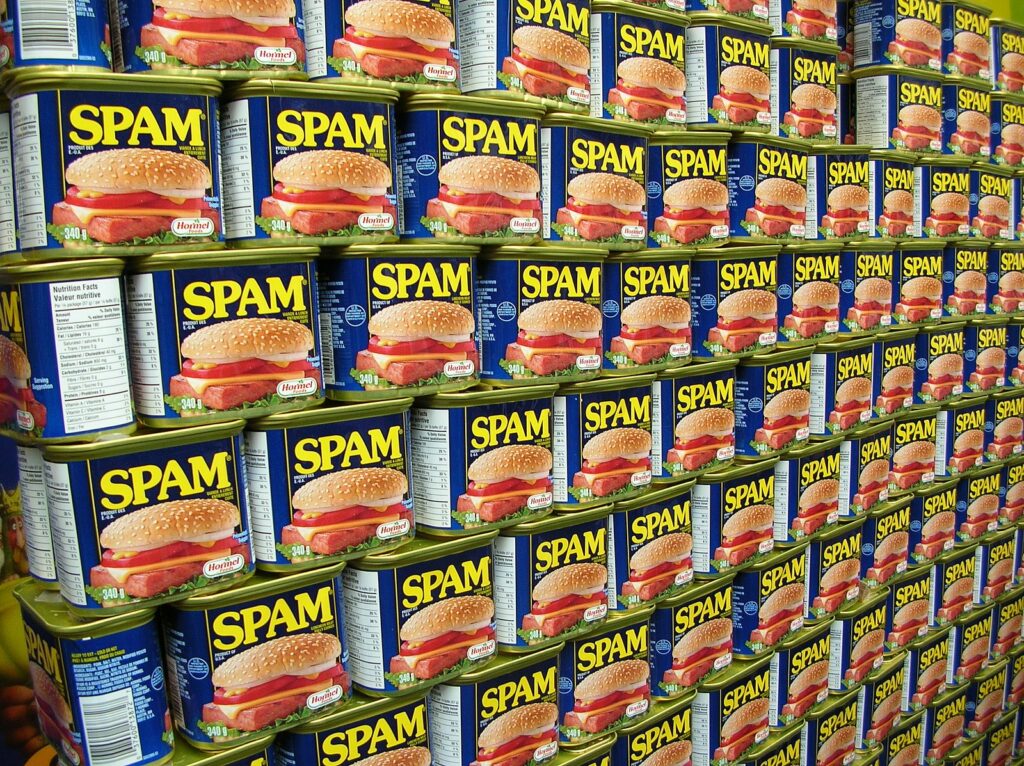
What is SPAM?
The canned lunch meat product SPAM was introduced to the market in 1937. Austin, Minnesota is where the makers Hormel Foods produced it. A great need for low-cost meat products was met in the latter part of the Great Depression thanks in large part to SPAM. And its renown only increased.
“It cemented its place in the culinary world during World War II, due to its ability to be stored for long periods of time,” explains James Schend, food editor at Taste of Home. “It could be easily shipped around the world.” And it was, both then and now; today SPAM products are available in 44 different countries, according to their brand site. There are now fifteen distinct types of SPAM, ranging from Teriyaki to Jalapeño to Classic. Whether you like it or not, it’s unavoidable. More than eight billion SPAM products have been sold globally, and in Austin, Minnesota, the home of SPAM, a museum opened its doors in 2016. Discover the unexpected origins and birthplaces of 19 additional foods that are often consumed.
What is SPAM made of?
Finding out that SPAM is not the mystery meat laden with preservatives you might assume it is could come as a nice surprise. Actually, there are just six ingredients in SPAM! All of them are listed on the brand’s website. They are: water, salt, sugar, sodium nitrite, potato starch, ham meat (which counts as one), and pork. The majority of those are as basic as they get! The only one that might raise eyebrows a little is the sodium nitrite, which is “a preservative to help retain freshness,” Schend explains. The website says that it is there to “uphold the meat’s high standard of quality.” The ground pork and ham are combined with the remaining ingredients and left for 20 minutes to form SPAM. The mixture is placed into vacuum-sealed cans after it reaches the appropriate temperature. The cans are prepared for labeling after they are boiled and allowed to cool for three hours. And that’s the entirety of it!
Now Trending:
- After All The Rumors About J-Lo And Ben Affleck’s Divorce, Jennifer Garner Has Made A Huge Decision
- After 43 Years, Pat Sajak’s Time As Host Of ‘wheel Of Fortune’ Has Come To An End
- After The Heartbreaking Divorce Rumors Involving Ben Affleck And Jennifer Lopez, Fans Spot Huge Detail In New Pic That Might Change Everything