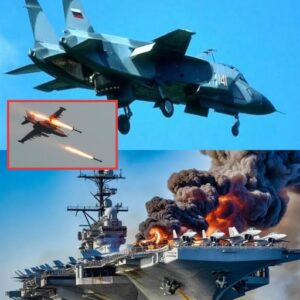
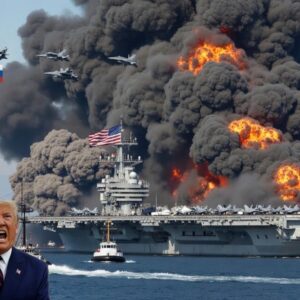
North Korean leader Kim Jong Un has issued a statement that is sending shockwaves across the globe.
In a fiery show of support for Iran, he declared that Pyongyang is prepared to supply Tehran with missiles — if asked.
Then came the line that stunned world capitals.
‘One missile is enough to erase Israel.’
This statement emerges during an escalating confrontation involving Iran and a U.S.-led coalition under what has been described as “Operation Epic Fury.”
Coalition strikes reportedly target Iranian leadership and strategic assets.
Israel, a key coalition partner, has been central to regional defense coordination.
Kim’s remarks are not merely symbolic — they signal a potential expansion of geopolitical alignment.
Reports indicate China has provided Iran with advanced military technology, including hypersonic anti-ship missile systems.
Meanwhile, Russia has amplified nuclear rhetoric. Former Russian president Dmitry Medvedev has issued pointed warnings to Western powers.
If these nations Russia, China, North Korea, and Iran deepen coordination, the global balance of power could shift significantly.
Each either possesses nuclear weapons or is closely aligned with nuclear-armed states.
Historically, Kim Jong Un has used extreme rhetoric as a strategic signaling tool — particularly during past standoffs with the United States and its allies.
The suggestion that a single missile could “erase” a nation dramatically escalates the tone.
However, analysts often distinguish between deterrence language and imminent action.
Still, in volatile conditions, rhetoric alone can alter military postures and diplomatic calculations.
Markets are already responding.
Energy infrastructure concerns have driven oil and gas price fluctuations.
European energy markets remain sensitive to geopolitical shocks.
Investors fear supply chain disruptions and broader instability.
What began as a regional confrontation now carries systemic global implications.
The world now faces a critical question:
Is this strategic posturing?
Or the early stages of a broader geopolitical realignment?
In an era where nuclear-capable states are increasingly aligned, even words can reshape global security architecture.
The situation remains fluid.
And the stakes have rarely been higher.