March 6, 2026
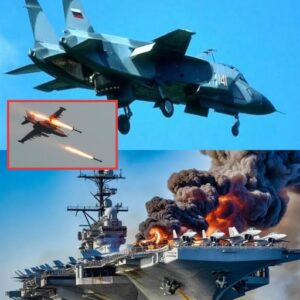
When Iran’s Revolutionary Guard released footage showing a drone swarm attacking a mock USS Abraham Lincoln (CVN‑72), the message was clear: cheap drones could overwhelm an expensive aircraft carrier. The video suggested that large numbers of low-cost weapons could defeat advanced military technology.
But real warfare is far more complex than a propaganda video.
If such an attack ever happened, it would likely begin with reconnaissance and gradual escalation rather than an immediate swarm. Drones launched from areas near Bandar Abbas could follow pre-programmed GPS routes toward a U.S. carrier strike group operating near the Strait of Hormuz.
However, these drones rely mostly on satellite navigation and fixed coordinates. They cannot easily change course or adapt to electronic warfare once launched. Their main advantage is low cost and large numbers.
Long before they reached the fleet, detection systems would likely identify them. Aircraft such as the Northrop Grumman E‑2D Hawkeye use advanced radar to detect small targets and share that information across the entire strike group through networked combat systems.
From there, the fleet’s layered defenses would activate. Systems like Phalanx CIWS, Rolling Airframe Missile, and Standard Missile SM‑6 can intercept threats at different ranges.
In addition, the U.S. Navy has been testing directed-energy weapons such as high-powered lasers and microwave systems. Instead of firing traditional ammunition, these weapons use the ship’s electrical power to disable drones by damaging their electronics.
This technology could change the economic balance of drone warfare. Instead of using expensive missiles against every incoming drone, ships could neutralize multiple threats using energy-based systems.
Still, no defense is perfect. A coordinated attack combining drones, ballistic missiles, and fast boats would create a complex battlefield requiring careful coordination between sensors, missiles, aircraft, and automated defense systems.
Ultimately, modern naval warfare is not just about weapons, but about integration—how sensors, networks, and defenses work together under pressure. Drone swarms test that system, but evolving technologies may reduce their effectiveness.
In the end, the most important result of such an attack might not be how many drones are destroyed, but how much enemy infrastructure is exposed in the process.