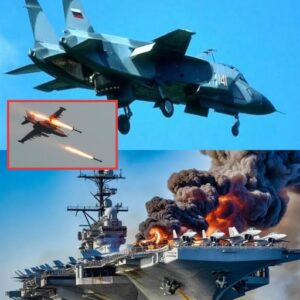
Midnight Over the Gulf: 154 Tomahawks and the Edge of a Wider War
At precisely 2:47 a.m., an encrypted message flashed across secure terminals at U.S. Central Command. It was not framed as a discussion or recommendation. It was a direct order: authorization confirmed. Within seconds, the same message reached American warships positioned across the Persian Gulf and the Red Sea. What followed unfolded with mechanical precision and historic consequence.Ninety seconds after the command was received, the first BGM-109 Tomahawk cruise missile erupted from its launch tube aboard a U.S. destroyer. The controlled blast illuminated the darkness before the missile arced upward and dropped low, hugging the terrain at nearly 550 miles per hour.
One by one, 154 Tomahawks followed in carefully timed waves, each programmed with coordinates refined through months of satellite surveillance, intercepted communications, and classified human intelligence.
thumbnail
Yet the missile launches were not the opening move.
Nearly 90 minutes earlier, U.S. Cyber Command and the National Security Agency had already begun a silent assault on Iran’s integrated air defense network.
Rather than triggering alarms through a complete blackout, American cyber operators inserted subtle distortions—microscopic delays in radar data, corrupted targeting information, and nearly imperceptible glitches. Iranian radar screens appeared functional. In reality, they were feeding their operators a dangerous illusion.
Inside the Situation Room, where the course of history is often changed – ABC News
Simultaneously, four EA-18G Growler electronic warfare aircraft launched from the USS Abraham Lincoln. These specialized jets, among the most advanced electronic warfare platforms in existence, positioned themselves strategically outside Iranian airspace. From there, they projected powerful jamming signals across multiple radar frequencies, carving invisible corridors through Iran’s detection systems. Cruise missiles could now slip through gaps that Iranian defenders did not even realize existed.
Behind the electronic shield, F/A-18 Super Hornets armed with anti-radiation missiles and precision-guided bombs moved into holding patterns. They were not the first strike—but the follow-through, prepared to exploit weaknesses opened by the Tomahawks.
Inside the Situation Room, where the course of history is often changed – ABC News
The attack unfolded in three distinct waves.
The first wave—38 missiles—targeted Iran’s air defense infrastructure.
Long-range surface-to-air missile batteries, including domestically developed Bavar systems and Russian-made S-300 units, were struck at their most vulnerable point: radar vehicles. Destroying launchers matters little if radar survives; destroying radar blinds the entire battery. Within minutes, key detection nodes were reduced to twisted metal.
Inside the Situation Room, where the course of history is often changed – ABC News
Eleven minutes later, the second wave crossed into Iranian territory through those newly created gaps.
Seventy-two missiles targeted the Natanz nuclear facility—not the deeply buried centrifuge halls themselves, but the infrastructure that makes them operational.
Power substations, cooling systems, ventilation shafts, and administrative buildings were systematically struck. The goal was not total annihilation but degradation—crippling the facility’s functionality without necessarily breaching its subterranean core.
Fordow, Iran’s most fortified enrichment site buried beneath 80 meters of rock near Qom, posed a far greater challenge.
Cruise missiles could not penetrate such depth.
Inside the Situation Room, where the course of history is often changed – ABC News
Only the 30,000-pound GBU-57 Massive Ordnance Penetrator—deliverable solely by B-2 stealth bombers—offered a realistic chance of reaching it. If Fordow was indeed targeted that night, those bombers would have approached quietly, far from public attention, their mission separate from the spectacle of the Tomahawk barrage.
The third and final wave, consisting of 44 missiles, focused on command-and-control infrastructure. Headquarters of the Islamic Revolutionary Guard Corps Aerospace Force, underground communication bunkers, and critical fiber-optic relay nodes were struck. The objective was strategic paralysis, not assassination. Iranian commanders were left struggling with disrupted communications during the most crucial hours following impact.
From first launch to final detonation, the operation lasted just 41 minutes.
Inside the Situation Room, where the course of history is often changed – ABC News
The immediate military outcome appeared tactically successful. Despite Iran’s layered air defenses—including short-range Tor-M1 systems and domestically produced interceptors—estimates suggest that only a small percentage of incoming missiles were intercepted. Even optimistic projections pointed to limited defensive success against such a saturated, electronically shielded assault.
Yet military precision does not equate to strategic certainty.
Iran’s nuclear program was designed with redundancy in mind. Critical components, enriched uranium stockpiles, and key personnel were likely dispersed long before any strike occurred. Destroying above-ground facilities may delay enrichment, but it does not necessarily eliminate capability. The difference between visible destruction and actual setback would take weeks—if not months—to assess.
Inside the Situation Room, where the course of history is often changed – ABC News
Meanwhile, geopolitical consequences began unfolding before dawn.
Global oil markets reacted instantly. With nearly one-fifth of the world’s oil supply passing through the narrow Strait of Hormuz, traders priced in the risk of escalation. Crude prices surged dramatically within hours. Even without immediate Iranian action, the mere possibility of maritime disruption destabilized energy markets.
Iran’s retaliation strategy—carefully constructed over two decades—activated across multiple fronts. Rocket fire from allied militias threatened U.S. positions in Iraq. Drone and missile launches targeted regional infrastructure in Saudi Arabia and the United Arab Emirates. Hezbollah forces signaled readiness in Lebanon, testing Israeli missile defense systems under increasing strain.
Inside the Situation Room, where the course of history is often changed – ABC News
Diplomatically, the fallout was equally severe. Russia condemned the strikes at the United Nations, framing them as unilateral aggression. China expressed concern while reassessing broader regional calculations. Allies and adversaries alike questioned whether the operation represented deterrence—or the opening phase of a wider conflict.
In the end, the operation demonstrated the extraordinary capability of modern combined-arms warfare: cyber intrusion, electronic suppression, precision missile strikes, and stealth bombing integrated seamlessly. What it could not deliver, however, was certainty.
Inside the Situation Room, where the course of history is often changed – ABC News
Did the strike eliminate the nuclear threat—or merely postpone it? Did it deter escalation—or ignite a regional chain reaction?
Cratered buildings and severed power lines are visible from satellite imagery. What lies beneath 80 meters of granite is not.
And that uncertainty may prove more consequential than the 154 missiles that lit up the night sky.