“Phase 2” in the Gulf? What the Latest U.S. Military Movements Toward Iran Really Mean
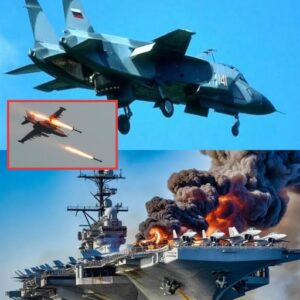
In recent days, reports have confirmed that two U.S. aircraft carrier strike groups are either operating in or moving toward the Middle East. The USS Abraham Lincoln is already positioned in the broader region, while the USS Gerald R. Ford — one of the most advanced carriers ever built — has been redeployed from previous assignments and is heading toward the same theater.
The presence of two carrier strike groups in the Persian Gulf or surrounding waters is not routine. It signals elevated readiness, strategic deterrence, and contingency planning at a scale rarely seen outside of major crises. Analysts describe such dual-carrier deployments as tools of both pressure and preparation.
But it is important to separate confirmed facts from dramatic framing.
There has been no official declaration of war. No announced strike campaign. No formal statement that “Phase 2” is an operational code name released by the Pentagon. What has happened is a significant military repositioning amid rising tensions tied to Iran’s nuclear program, regional proxy conflicts, and stalled diplomatic negotiations.
A U.S. carrier strike group typically includes:
One nuclear-powered aircraft carrier
60–75 aircraft (including F/A-18 Super Hornets, F-35 stealth fighters, electronic warfare aircraft, and airborne radar platforms)
Guided missile cruisers and destroyers
Submarines operating in support
One carrier provides strong regional deterrence. Two dramatically increase sortie generation — meaning more aircraft can launch, refuel, strike, and return in sustained cycles. It also expands defensive coverage against missiles, drones, and fast-attack boats.
In simple terms: two carriers shift the military balance from signaling to potential campaign capability.
That does not mean conflict is inevitable — but it does mean the United States is preparing for multiple scenarios simultaneously.
Tensions have escalated over concerns about Iran’s nuclear enrichment levels and missile production. Western intelligence agencies have reported that Iran has expanded uranium enrichment capacity and missile manufacturing, though Tehran maintains its program is for peaceful purposes.
At the same time:
Iran continues to support proxy groups across Lebanon, Iraq, Syria, and Yemen.
Israel has repeatedly warned it will not allow Iran to obtain a nuclear weapon.
U.S. officials have signaled that “all options remain on the table” if diplomacy fails.
Recent political rhetoric — including strong statements suggesting regime change would be desirable — has intensified speculation. However, public political language does not automatically translate into operational orders.
If conflict were to occur, analysts believe it would focus on:
Air defense suppression
Missile infrastructure targeting
Nuclear facility strikes
Electronic warfare disruption
Naval protection of shipping lanes
Aircraft such as the F-35 would likely be used to penetrate air defenses, while support aircraft like the E-2D Hawkeye and EA-18G Growler would manage radar and electronic battlespace control. Tomahawk cruise missiles from destroyers could target fixed infrastructure.
But military planners also recognize the risks.
Iran has publicly warned that any U.S. attack would trigger retaliation against American bases in the region. The U.S. maintains facilities in Qatar, Bahrain, Jordan, Kuwait, and elsewhere.
Iran also possesses:
A large ballistic missile arsenal
Drone swarming capabilities
Proxy forces capable of launching rockets and missiles across multiple fronts
A strike on Iran would not remain confined to a single battlefield. It could trigger:
Missile attacks on U.S. bases
Hezbollah rocket fire toward Israel
Houthi disruptions in the Red Sea
Threats to oil shipping through the Strait of Hormuz
The Strait alone carries roughly 20% of global oil trade. Even limited disruption could send energy prices soaring, affecting Europe, Asia, and global inflation.
Despite military positioning, diplomatic negotiations have not formally collapsed. Officials from both sides continue to signal that talks are ongoing, even if progress is slow and mutual trust is low.
This creates a dual-track dynamic:
Military pressure to strengthen negotiating leverage.
Diplomatic engagement to avoid escalation.
History shows that large deployments can serve as coercive diplomacy — intended to influence negotiations without triggering open war.
The Odds Favor a Limited U.S. Strike Over a Breakthrough with Iran
The phrase “Phase 2” implies that a first phase has already occurred and that escalation is locked in. However, there has been no official confirmation of such terminology from the U.S. Department of Defense.
Military planning often includes phased contingencies internally, but public narratives can exaggerate what is, in practice, a posture shift rather than an active campaign.
The Odds Favor a Limited U.S. Strike Over a Breakthrough with Iran
The true strategic dilemma is this:
Even if military strikes were to significantly damage Iran’s nuclear infrastructure, would that permanently eliminate its nuclear ambitions — or merely delay them?
Air power can destroy facilities. It cannot erase political intent. Many security analysts argue that long-term resolution depends on political agreements, not only military capability.
For now, the carriers are moving. Aircraft are ready. Missile systems are active. But diplomacy remains technically alive.
In geopolitics, preparation does not always equal execution.
The coming weeks will likely determine whether this show of force becomes leverage at the negotiating table — or the prelude to the most serious U.S.–Iran confrontation in decades.